Zoe, what does your ideal vacation look like now?
Everyday Life · EP27
Everyday Life: Why Quiet Travel Is Growing
Why more travelers are choosing silence, distance from screens, and time alone
Free membership
Sign up free to unlock this episode.
After you log in, every lesson is 100% free — full audio, interactive transcript, expressions, and speaking practice. No paid plan.
- Unlimited access to the full episode library
- Synced transcripts and key expressions
- Save favorites and build your word list
Two newest episodes stay open for guests so you can try Atoz first.
Ready. Select a line to jump into the conversation.
Honestly? A quiet room, a slow morning, and no alarm.
No famous sights? No packed schedule?
Maybe one or two sights. But I do not want every hour planned.
That feeling has a name now: quiet travel.
It means choosing calm places and simple experiences, right?
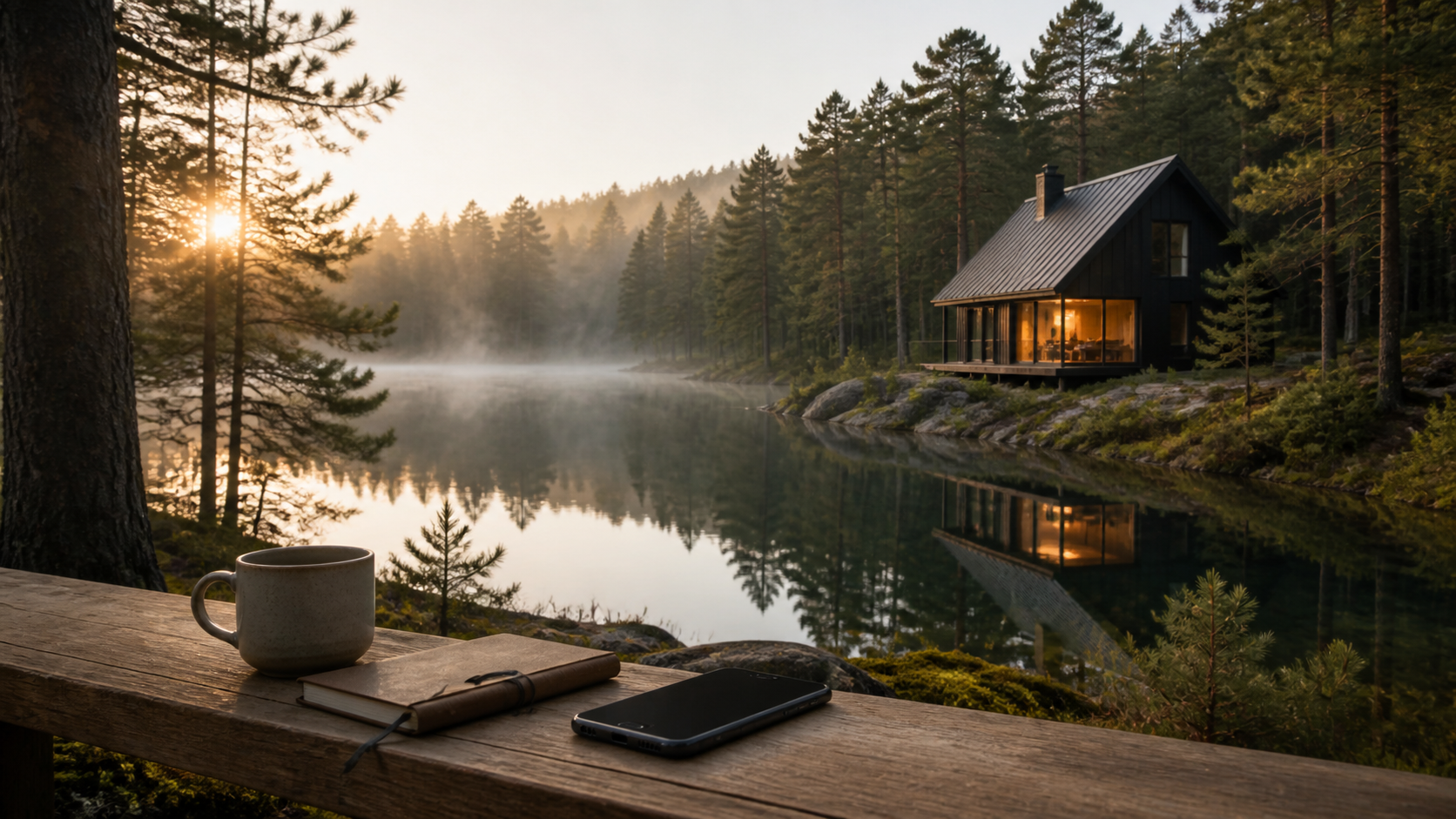
Exactly. It can mean a cabin, a small hotel, or a peaceful town.
It can also mean an early walk before the crowds arrive.
So quiet travel is not one special type of trip.
No. The main idea is to slow down and make space for rest.
Why are more people interested in it now?
Daily life is noisy, even when the room is silent.
You mean emails, work messages, and constant notifications.
Yes. Our phones ask for attention all day.
Cities can add traffic, bright screens, and crowded spaces.
All that can create sensory overload.
Travel used to be the break from that pressure.
But travel can feel busy too. We plan, post, and rush to the next place.
Sometimes a vacation becomes another project to finish.
Exactly. Quiet travel changes the goal.
The goal is not to see the most things.
It is to return refreshed.
A digital detox is often part of the experience.
That sounds difficult. Do I have to throw away my phone?
Not at all. A digital detox is simply a planned break from screens and apps.
I could keep my phone for maps and emergencies.
Yes, but you might turn off social media and work alerts.
That helps people set boundaries between work and vacation.
A 2026 Priceline survey found that many travelers want stronger work boundaries on trips.
That makes sense. It is hard to switch off when work is in your pocket.
Hilton also reported growing interest in calm, connection, and solo time.
Solo time does not always mean taking the whole trip alone.
Right. You might add one quiet day before meeting family.
Or a couple might read together without talking.
That is a nice idea: being alone together.
Quiet is not the same as loneliness.
How is the travel industry responding?
Some hotels offer soundproof rooms, phone-free spaces, and slower activities.
Other places focus on nature, sleep, or small-group experiences.
They are selling more than a bed. They are selling fewer interruptions.
What would one quiet travel day actually look like?
You might wake up without an alarm and eat breakfast slowly.
Then take a walk without checking how many steps you took.
You could visit one local café instead of five popular places.
In the afternoon, you might read, nap, or watch the weather change.
That sounds almost too simple.
Simple can feel unusual when we are used to doing several things at once.
True. Even rest can become a task when we try to do it perfectly.
Quiet travel gives people permission to leave part of the day unplanned.
And an open hour can become the best memory.
Maybe you find a small bakery or have a long conversation.
Those moments are hard to schedule in advance.
It also changes what we bring.
Fewer devices, comfortable clothes, a book, and maybe a paper map.
The lighter plan can make the trip feel longer.
Because we are paying attention instead of racing through it.
But quiet travel can sound expensive.
It can become a luxury trend, but it does not have to be.
What is a simple version?
Take a train to a nearby town. Walk, read, and leave time open.
So you do not need to go off the grid in a remote forest.
No. You can have a quiet afternoon close to home.
That sounds like intentional travel.
Yes. You choose each part of the trip for a clear reason.
There is also a responsibility to protect quiet places.
We should respect local people, trails, and wildlife.
Otherwise, a peaceful place can become the next crowded attraction.
And then the silence disappears.
Maybe the biggest change is how we measure a good trip.
Instead of asking, “How much did I see?” we ask, “How did I feel?”
Did I sleep well? Did I breathe more slowly?
Did I reconnect with myself and the people around me?
Quiet travel does not reject adventure.
It simply leaves room for a pause.
And sometimes the pause is the destination.
That’s all for today’s episode.
The takeaway is simple: a restful trip does not need a packed schedule.
Thanks for listening, and we’ll see you next time.
Speaking practice
Speak It Out
Take a moment to answer each question in English.
Recording is off. Click a question to play it.
Would quiet travel help you feel refreshed, or would you prefer a more active trip? Explain why.
Click to play
What boundaries would you set with your phone or work messages during a vacation?
Click to play