The idea of a Tesla phone has floated around the internet for years.
Big Tech & AI · EP49
The Tesla Space Phone: What's Real Now?
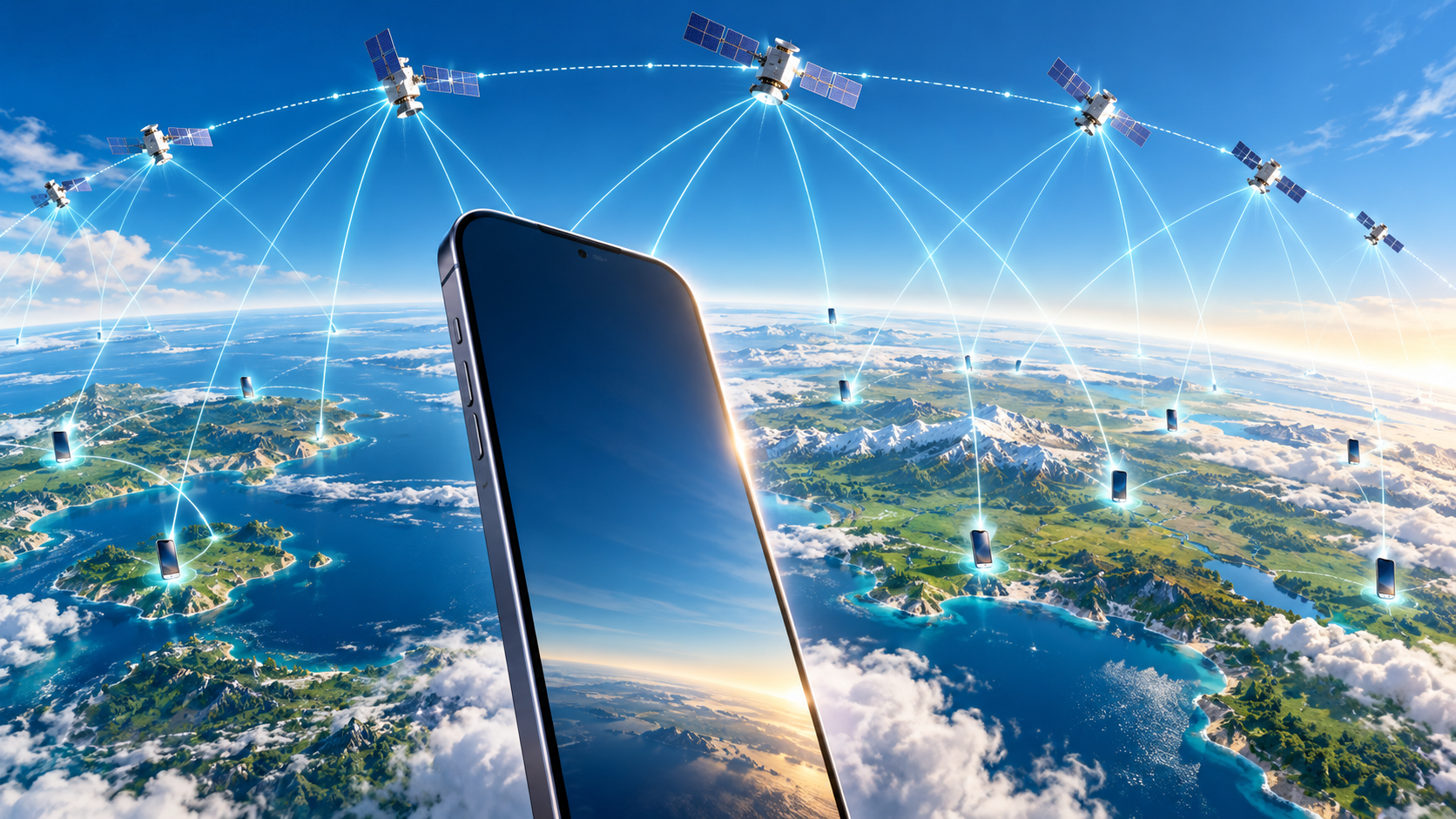
A Tesla phone remains unannounced, while SpaceX is building a clearer path toward a mobile network that works with ordinary phones.
Free membership
Sign up free to unlock this episode.
After you log in, every lesson is 100% free — full audio, interactive transcript, expressions, and speaking practice. No paid plan.
- Unlimited access to the full episode library
- Synced transcripts and key expressions
- Save favorites and build your word list
Two newest episodes stay open for guests so you can try Atoz first.
Ready. Select a line to jump into the conversation.
A phone that connects directly to satellites sounds like the perfect story for Elon Musk's companies.
But as of today, Tesla has not announced a phone that we can verify.
SpaceX, on the other hand, is making a very real move into mobile service.
That contrast raises a better question: do you need a special phone when the network itself is changing?
The timing is interesting because SpaceX just announced another piece of its mobile plan.
On October eighth, SpaceX said it had agreed to buy a nationwide portfolio of wireless spectrum.
Spectrum means the radio frequencies that carry signals between a network and a phone.
The deal covers low-band frequencies around eight hundred megahertz, which are useful for reaching through walls.
This is not a Tesla handset launch or a new device you can order today.
The purchase still needs approval from the Federal Communications Commission before it can close.
SpaceX says this spectrum could help Starlink Mobile connect people through satellites and equipment on the ground.
Think of it as a plan for one mobile network with more than one way to reach your phone.
The word "plan" matters, because the promised nationwide experience has not been delivered yet.
SpaceX also received approval for another fifteen thousand direct-to-device satellites in a separate decision.
Approval to launch satellites is a milestone, but it does not mean all those satellites are already operating.
Here is the detail that makes the Tesla-phone rumor less convincing to me.
Starlink says its current mobile system works with existing LTE phones when they can see the sky.
In other words, the basic idea does not require a Tesla logo on the phone.
It also does not require people to replace a working handset just to reach a satellite.
Today's service is still more limited than the full mobile experience SpaceX hopes to build.
Coverage, available features, and performance depend on the network, your carrier, and your location.
SpaceX describes faster service and a broader connection through its future satellite generation.
Those are future goals, not a promise that every existing phone gets fast satellite internet today.
Our earlier Starlink episode explained how a normal phone reaches a satellite overhead.
This time, the bigger story is who owns the network and who serves the customer.
Why, then, does the idea of a Tesla phone keep coming back?
One reason is that Tesla and SpaceX share a famous leader, and people naturally connect their projects.
Tesla also has cars, software, charging, and an app that already lives on your phone.
It is easy to imagine a dedicated device tying those services together more tightly.
But an imaginable product is not the same as a product roadmap.
Tesla and SpaceX are separate companies, and a SpaceX network decision is not a Tesla hardware announcement.
Some online images show a futuristic "Model Pi" phone with dramatic features.
They may be creative concepts, but they are not evidence that Tesla is manufacturing one.
The rumor becomes more believable when real satellite news appears beside it.
That is why we need to separate three things: an idea, an announced plan, and a service people can actually use.
Even so, the phone idea deserves a serious business test.
What would Tesla gain from building its own handset instead of supporting ordinary phones?
It might control more of the experience, from the screen and software to the connection.
Perhaps it could offer special features for a car owner or a customer far from cell towers.
But those are possibilities, not products Tesla has committed to making.
Building a competitive phone also means managing factories, repairs, software updates, and a huge app ecosystem.
Customers would need a strong reason to leave the phones and apps they already know.
Meanwhile, a network that reaches existing devices can serve people without winning a handset war.
That makes the network-first path look more practical, at least with the evidence we have today.
It also gives SpaceX more potential customers than a phone sold to one brand's fans.
A special phone could still make sense if future services truly need hardware ordinary phones lack.
Yet Starlink's current message points in the opposite direction: use the LTE phone already in your pocket.
A few future signals could justify changing our view.
First, I would look for an official Tesla product announcement with a real device, price, and release plan.
Second, I would watch the spectrum deal and look for evidence that a ground-and-satellite network is being deployed.
Third, I would check the actual requirements of Starlink Mobile as its next generation reaches customers.
If ordinary phones keep working, the need for a Tesla-branded phone becomes even harder to explain.
If new features demand special hardware, the argument for a new device could grow stronger.
Neither outcome is guaranteed, so a confident launch date would be a guess.
The clearest fact today is that SpaceX is investing in a mobile network, not announcing a Tesla phone.
That may be the surprising twist: the so-called space phone story could be about the network behind your phone.
The network behind your phone might matter more than the name printed on any handset.
That's all for today's episode.
Thanks for listening, and we'll see you next time.
Speaking practice
Speak It Out
Discuss what would make a Tesla phone useful and what evidence would change your view.
Recording is off. Click a question to play it.
Would you buy a special satellite phone if your current phone already worked with the network, and why?
Click to play
What new evidence would make you believe Tesla is really planning a phone?
Click to play
Key Expressions
an imaginable product is not the same as a product roadmapA plausible idea should not be confused with an announced company plan.
Analytical and cautious
- Discussing product rumors
- Evaluating future technology claims
An imaginable product is not the same as a product roadmap.
with the evidence we have todayA conclusion is based on current information and may change later.
Measured
- Qualifying an opinion
- Explaining uncertainty
That seems most practical with the evidence we have today.
changing our viewRevising an opinion when new evidence appears.
Open-minded
- Technology forecasts
- Business analysis
A few future signals could justify changing our view.