In 2022, Yvon Chouinard made a decision that sounded almost impossible.
Stories · EP48
Patagonia: The Founder Who Gave Away His Company
Yvon Chouinard's most unusual decision grew from an older lesson: when a successful system harms what it serves, redesign the system.
Free membership
Sign up free to unlock this episode.
After you log in, every lesson is 100% free — full audio, interactive transcript, expressions, and speaking practice. No paid plan.
- Unlimited access to the full episode library
- Synced transcripts and key expressions
- Save favorites and build your word list
Two newest episodes stay open for guests so you can try Atoz first.
Ready. Select a line to jump into the conversation.
He gave away Patagonia, the outdoor company he had spent decades building.
He did not sell it to a competitor or take it public.
Instead, his family transferred the company's ownership to two new organizations.
One would protect Patagonia's values, while the other would receive money to defend nature.
The announcement said that Earth was now the company's only shareholder.
It was a dramatic ending, but it did not appear from nowhere.
Chouinard had spent his life questioning the normal rules of both climbing and business.
His story began far from corporate offices and fashion shows.
As a teenager, Chouinard became fascinated by climbing in Southern California.
Climbers needed metal pitons that could be hammered into cracks for protection.
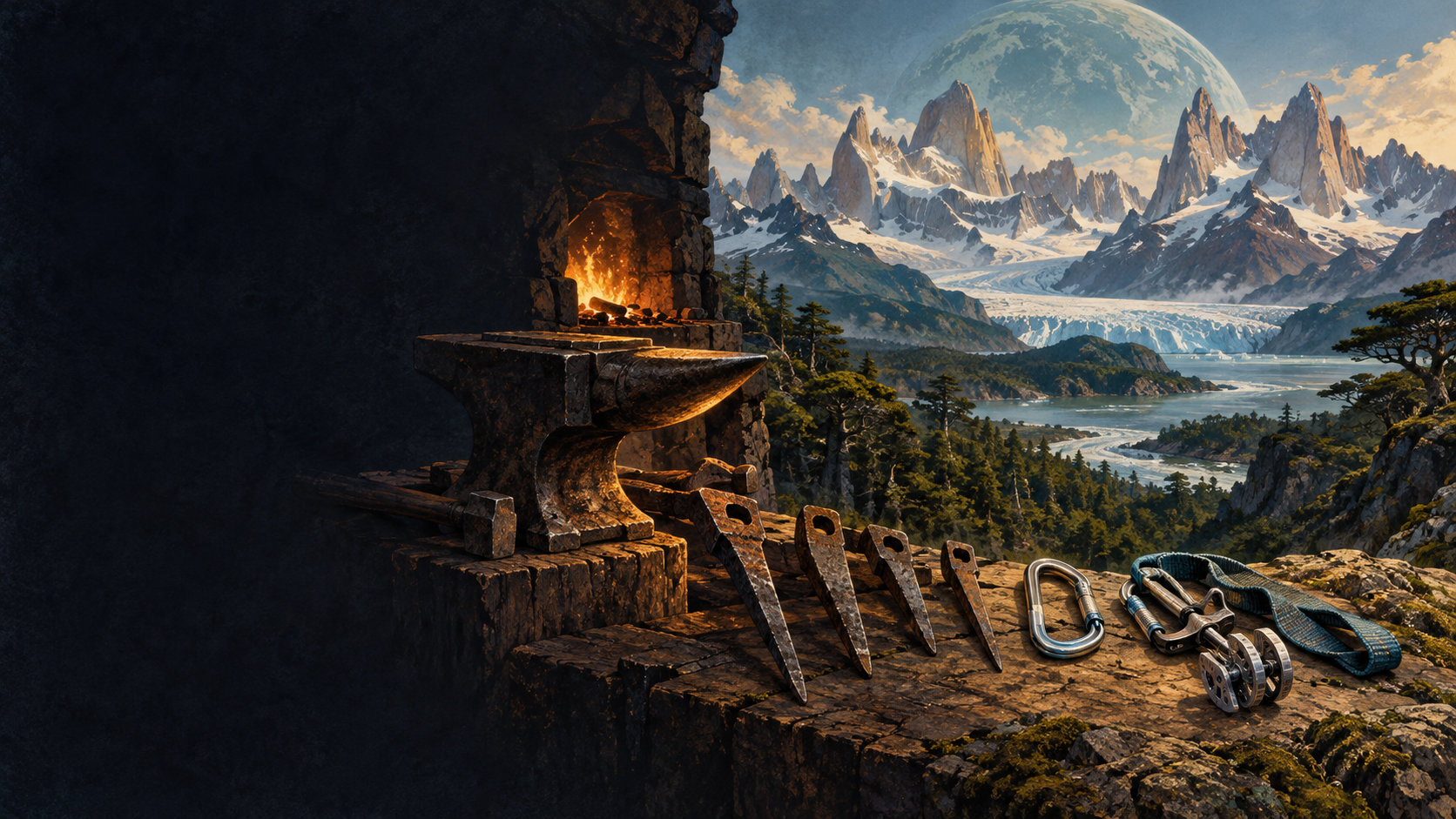
In 1957, he bought a used coal-fired forge and taught himself blacksmithing.
He shaped tough steel pitons by hand and tested them on real climbs.
Friends wanted the same equipment, so he sold pieces from the back of his car.
The workshop grew because the tools were strong, reusable, and made by a climber.
Chouinard Equipment eventually became a leading American maker of climbing hardware.
But its most successful product was creating a problem on the mountains.
Steel pitons had to be hammered into the rock and pulled out again.
As more people climbed popular routes, the repeated blows widened natural cracks.
The marks were especially visible in places such as Yosemite Valley.
Chouinard realized that his own equipment was helping damage the landscapes he loved.
The obvious business response would have been to ignore the problem.
Pitons were important products, and customers already trusted them.
Instead, Chouinard and his partners asked climbers to stop using them whenever possible.
Their 1972 catalog promoted removable aluminum chocks that left fewer scars.
The change became part of a wider movement known as clean climbing.
This was an early example of Patagonia's unusual logic.
If a profitable product harmed the natural world, success was not a good enough defense.
The clothing business began as a practical answer to life outdoors.
Climbers needed durable clothes that could handle rock, wind, and changing weather.
A colorful rugby shirt Chouinard brought back from Britain became unexpectedly popular.
More clothing followed, and the new brand took the name Patagonia in 1973.
The distant region suggested wild mountains without tying the company to one sport.
Over time, Patagonia became known for technical jackets, fleece, packs, and outdoor equipment.
Growth gave the company influence, but it also increased its environmental footprint.
Factories used energy, synthetic materials depended on fossil fuels, and every shipment created emissions.
Chouinard did not pretend that selling outdoor products was harmless.
He began treating environmental responsibility as a cost the business had to face.
Starting in 1985, Patagonia committed part of its sales to environmental groups.
The important word was sales, not profits.
A difficult year would not remove the obligation simply because earnings were lower.
Chouinard described the commitment as a self-imposed earth tax.
In 2002, he and Craig Mathews helped create 1% for the Planet.
The network encouraged other businesses to support environmental organizations as well.
Patagonia also experimented with recycled materials, repairs, and longer product life.
These choices did not erase the tension between consumption and conservation.
A company still needs customers to buy things, even when it asks them to buy less.
That contradiction became central to Patagonia's identity rather than something hidden from view.
As Chouinard grew older, a harder question appeared.
What would happen to Patagonia after its founder was gone?
Selling the company could place its values under a new owner's control.
Taking it public could create pressure for faster growth and short-term returns.
Passing it directly to the family could preserve control, but it would not guarantee the mission forever.
Chouinard and his advisers searched for a structure that could outlive any individual.
Their answer separated voting power from economic value.
The design was unusual because it treated the company's purpose as something worth protecting legally.
All of Patagonia's voting stock went to the Patagonia Purpose Trust.
That trust holds the power to protect the company's mission and key decisions.
All of the nonvoting stock went to a nonprofit organization called the Holdfast Collective.
The collective receives money that is not reinvested in Patagonia's operations.
It can use those funds to address the environmental crisis and protect nature.
Patagonia itself remains a for-profit company rather than becoming a charity.
It still has employees, customers, suppliers, competition, and financial risks.
The difference is where ownership power sits and where excess value is designed to flow.
The structure tries to keep purpose from disappearing during a future sale or leadership change.
The decision does not make Patagonia perfect.
Outdoor clothing still consumes resources, and environmental claims deserve careful examination.
The ownership model also depends on institutions created by one wealthy family.
Other founders may not have the same freedom, money, or control.
Still, Chouinard changed the question surrounding a successful company's final chapter.
Instead of asking who would pay the highest price, he asked what the company should protect.
That question connected the final ownership decision to the old climbing lesson.
When pitons damaged the rock, he was willing to challenge the product that built his business.
When conventional ownership threatened the mission, he challenged that structure too.
That's all for today's episode.
Patagonia's story suggests that responsibility becomes real when it changes who receives power and value.
Thanks for listening, and we'll see you next time.
Speaking practice
Speak It Out
Think about how ownership can shape a company's purpose.
Recording is off. Click a question to play it.
Should a company protect its mission even when that choice may reduce future profits? Explain your view.
Click to play
What responsibilities should a founder consider when choosing the next owner of a successful company?
Click to play
Key Expressions
appear from nowhereseem to happen without an obvious history or cause.
neutral
- change
- decisions
The ownership decision did not appear from nowhere.
a good enough defensea reason strong enough to justify a choice or action.
analytical
- debate
- business
Profit was not a good enough defense for damaging the rock.
place something under someone's controlgive a person or group the power to direct something.
formal
- ownership
- governance
A sale could place the mission under a new owner's control.