Taylor Swift became one of the world's biggest artists before she owned all the recordings that made her famous.
Stories · EP31
Stories: Taylor Swift — Taking Back Her Music
The sale, the re-recording gamble, and the fan-powered campaign that changed music ownership
Free membership
Sign up free to unlock this episode.
After you log in, every lesson is 100% free — full audio, interactive transcript, expressions, and speaking practice. No paid plan.
- Unlimited access to the full episode library
- Synced transcripts and key expressions
- Save favorites and build your word list
Two newest episodes stay open for guests so you can try Atoz first.
Ready. Select a line to jump into the conversation.
For years, the master recordings of her first six albums belonged to other companies.
Then, in May 2025, she announced that those masters finally belonged to her.
The purchase ended a public fight, but the most interesting part was how she changed the balance of power.
She did not simply wait for the original recordings to come back onto the market.
She created new versions, persuaded millions of listeners to choose them, and made ownership part of the story.
To understand that decision, we need to return to Nashville in 2005.
Swift was fifteen years old when she signed with the new independent label Big Machine Records.
She was a young songwriter with an acoustic guitar, a clear voice, and a chance to reach a real audience.
The label would help finance, market, and distribute her records.
In return, the label owned the master recordings created under the contract.
A master is the main recorded version from which streams, downloads, records, and licensed uses are produced.
The songwriter may still have rights in the song itself, while another party owns that specific recording.
That distinction can sound technical until a catalog becomes extremely valuable.
Swift's first album arrived in 2006, followed by Fearless, Speak Now, Red, 1989, and Reputation.
Across those six records, a teenage country singer became a global pop star.
The songs grew more valuable with every tour, stream, film placement, and new generation of listeners.
When Swift left Big Machine in 2018, she negotiated ownership of the masters for her future albums.
But the six earlier masters remained with her former label.
Swift later said she had repeatedly asked for a chance to buy them.
She said the proposal available to her would have required earning back one old album for each new one.
She chose to leave rather than remain tied to that arrangement.
In June 2019, Big Machine was sold to Ithaca Holdings, led by music executive Scooter Braun.
The deal included the masters of Swift's first six albums.
Swift said she learned about the sale when the public did and described it as deeply painful.
The companies involved disputed parts of her account, and the argument quickly became personal and public.
However, the lasting question was larger than the people involved.
Could an artist reduce the commercial power of masters she did not own?
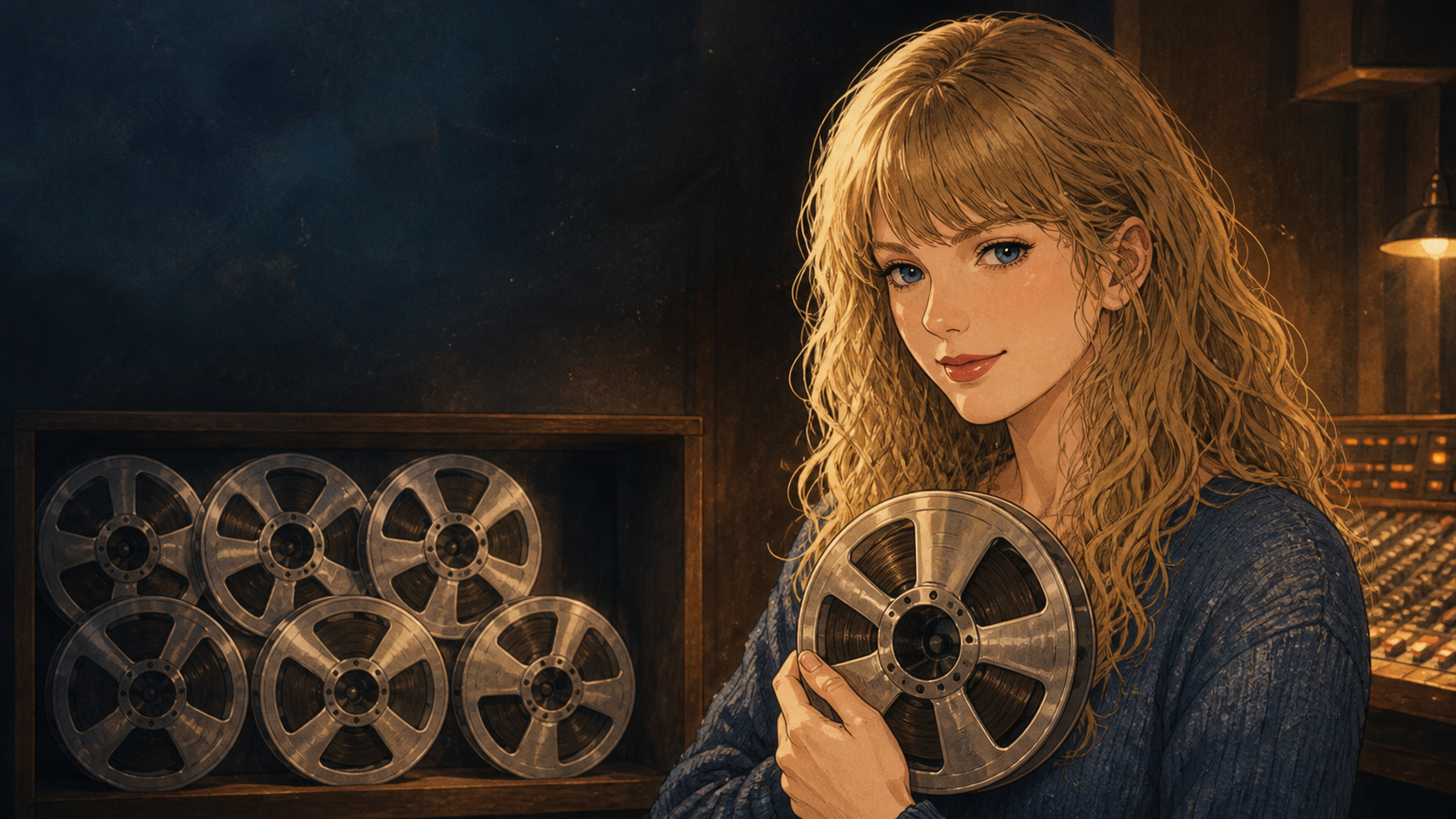
Swift's answer was to record the music again.
A re-recording is not a remix or a cleaned-up copy of an old track.
The vocals, instruments, production, and mixing must be rebuilt into a new master recording.
The new version must feel familiar enough for listeners while existing as a separate legal and creative product.
It was an expensive gamble with no guarantee that the public would follow her.
Listeners already knew the original recordings and could continue streaming them.
New versions might have confused casual fans or divided demand between two nearly identical catalogs.
Swift turned that weakness into a clear choice by calling the new releases Taylor's Version.
The label told listeners which recordings she controlled without requiring a lesson in copyright law.
Fearless, Taylor's Version, arrived in April 2021 and reached number one in major markets.
Red, Taylor's Version, followed later that year with both rebuilt songs and previously unreleased material.
Speak Now and 1989 received their own Taylor's Version releases in 2023.
All four re-recorded albums debuted at number one on the Billboard 200.
Fans did more than buy familiar songs again.
They treated their listening choice as support for the artist's claim to her work.
Music supervisors and advertisers could also license the newer recordings when they wanted a Swift song.
The original masters did not disappear, but they no longer stood alone in the market.
With every successful release, Swift gained more bargaining power over the story and the economics of her catalog.
Then the Eras Tour turned that catalog into a live history of her career.
From March 2023 to December 2024, the tour played 149 shows across five continents.
Guinness World Records reports a gross of more than two billion dollars, the highest for any solo tour.
Onstage, the old albums were not forgotten property locked inside a business dispute.
They were living chapters that millions of people still connected to their own memories.
The tour strengthened the relationship that had made the re-recording project possible.
In 2020, Ithaca had sold the original masters to the investment firm Shamrock Capital.
For several more years, the originals remained outside Swift's control while the new versions grew in value.
Eventually, Shamrock and Swift reached a direct agreement.
On May 30, 2025, she announced that she had purchased the masters of her first six albums.
The deal also reunited her with related videos, artwork, photographs, and unreleased material from those years.
In her public letter, Swift wrote that all the music she had ever made now belonged to her.
She also said the success of the Eras Tour had allowed her to buy back the music.
That made the ending unusually circular.
The fans who supported the new recordings also helped create the tour that financed the return of the originals.
Still, this story should not become a simple formula for every musician.
Re-recording several albums requires money, time, legal permission, technical skill, and an unusually loyal audience.
Most artists do not have enough leverage to weaken the value of an old catalog this way.
Swift also did not invent the struggle for artistic ownership.
Musicians had challenged contracts and fought for their masters long before her dispute.
Her unusual contribution was turning a complicated industry issue into a choice ordinary listeners could understand.
A small phrase beside an album title became a public signal about control, consent, and commercial value.
Swift has said that younger artists now tell her they negotiate ownership more carefully because of her experience.
That may be the most lasting result of the entire campaign.
She recovered a valuable catalog, but she also changed what many musicians ask before signing the first contract.
Taylor Swift's victory was not simply that she became powerful enough to purchase the past.
It was that she rebuilt the past, invited the audience into the process, and returned with greater autonomy.
That's all for today's episode.
Her story shows that ownership can become part of the creative work, not only a business detail.
Thanks for listening, and we'll see you next time.
Speaking practice
Speak It Out
Take a moment to answer each question in English.
Recording is off. Click a question to play it.
Was re-recording her albums mainly a creative decision, a business strategy, or both? Explain your view.
Click to play
How much control should artists keep when a company helps finance and promote their early work?
Click to play